- 60-Day Worry-Free Guarantee
- Free Shipping on Orders $20+
- Heirloom · Untreated · Non-GMO
Seed Depth: ¼ inch
Plant Spacing: 2–4 inches
Row Spacing: 12–18 inches
Sunlight: Full sun
Soil Temperature: 50°F+
Days to Sprout: 10–21 days
Days to Maturity: 65–70 days
Lifecycle: Annual
Sunlight: Full sun
Soil: Loose, well-worked, rock-free soil
Indoor Start: Not recommended; long taproot does not transplant well
Direct Sow: Sow outdoors in early spring 2–4 weeks before last frost when soil reaches at least 50°F
Succession Planting: Sow every 2–3 weeks for extended harvest
Watering: Keep soil consistently moist but not waterlogged to support even root development
Thinning: Thin to 2–4 inches apart once seedlings reach 1 inch tall to reduce competition
Fertilization: Light feeding supports steady growth without encouraging excessive foliage
Mulching: Mulch helps retain moisture and regulates soil temperature
When to Harvest: Harvest roots when they reach usable size, about ¾–1 inch in diameter, typically 65–70 days after planting
How to Harvest: Loosen soil and gently pull roots to avoid breakage
Slow Germination: Carrot seeds can take up to 2–3 weeks to sprout, especially in cool soil, so keep the seed bed consistently moist during germination
Soil Matters: Loose, finely worked, rock-free soil helps roots grow straight and prevents forking or stunting
Cool Season Preference: Best root quality develops in cool weather, making spring and fall plantings ideal
Edible Greens: Don’t forget the greens—carrot tops are flavorful and make a great addition to pestos, soups, and fresh sauces
WHY YOU’LL LOVE IT
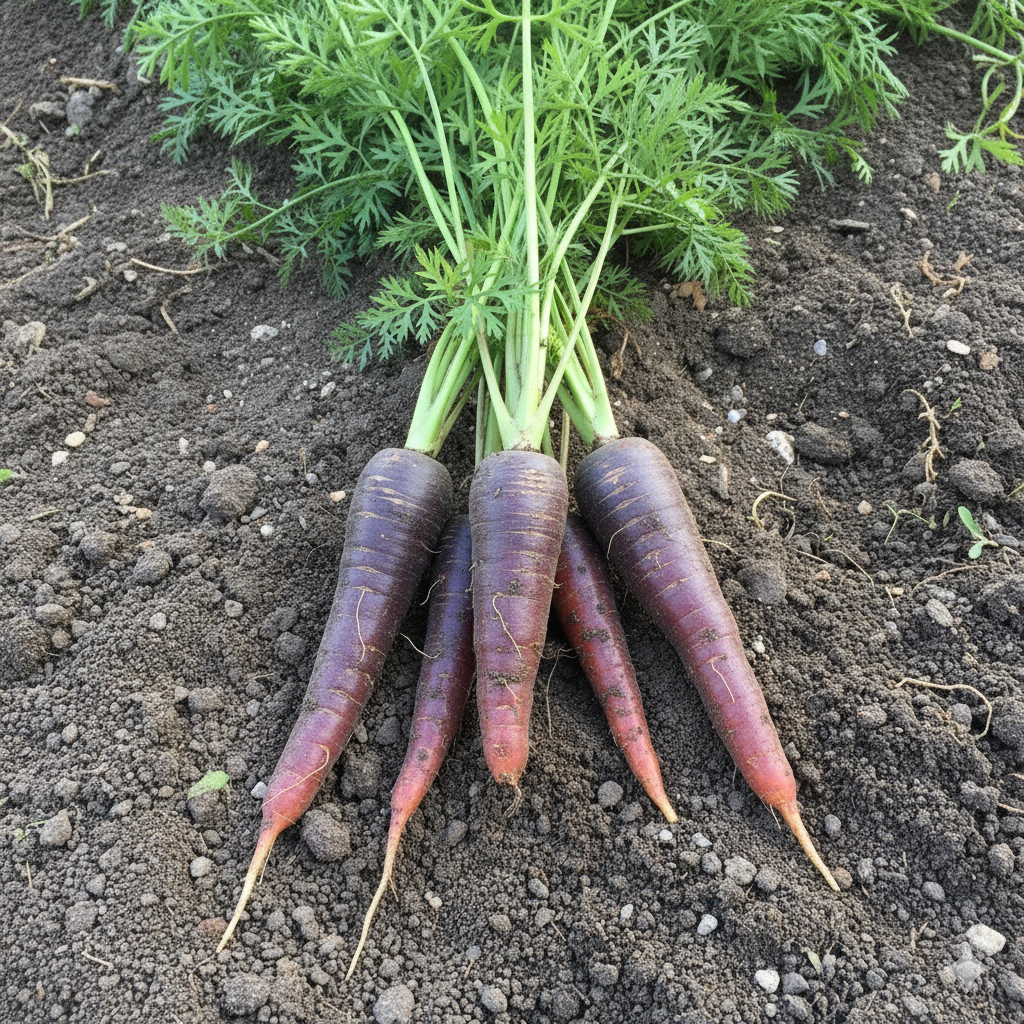
Beautiful Color: Deep purple outside with bright orange core that makes meals pop
Classic Sweetness: Tender, sweet roots with the familiar carrot flavor your family loves
Versatile Harvest: Enjoy at baby size or full length depending on your planning
Reliable Maturity: Ready in about 65–70 days for quick turnaround in cool-season beds
FLAVOR & CULINARY USES
Flavor: Sweet, crisp, and classic carrot flavor with a vibrant hue
Culinary Uses: Raw salads, roasting, steaming, juicing, and creative colorful dishes
SEEDS PER PACKET
| 500mg | Approximately 320 |
| 1g | Approximately 640 |
WHY YOU’LL LOVE IT
Beautiful Color: Deep purple outside with bright orange core that makes meals pop
Classic Sweetness: Tender, sweet roots with the familiar carrot flavor your family loves
Versatile Harvest: Enjoy at baby size or full length depending on your planning
Reliable Maturity: Ready in about 65–70 days for quick turnaround in cool-season beds
FLAVOR & CULINARY USES
Flavor: Sweet, crisp, and classic carrot flavor with a vibrant hue
Culinary Uses: Raw salads, roasting, steaming, juicing, and creative colorful dishes
SEEDS PER PACKET
| 500mg | Approximately 320 |
| 1g | Approximately 640 |
Recently viewed
Recommended for you
Recently viewed

2625 N Neergard Ave, Ste 101 Springfield, MO 65803
-
Payment methods

Share and get 15% off!
Simply share this product on one of the following social networks and you will unlock 15% off!